



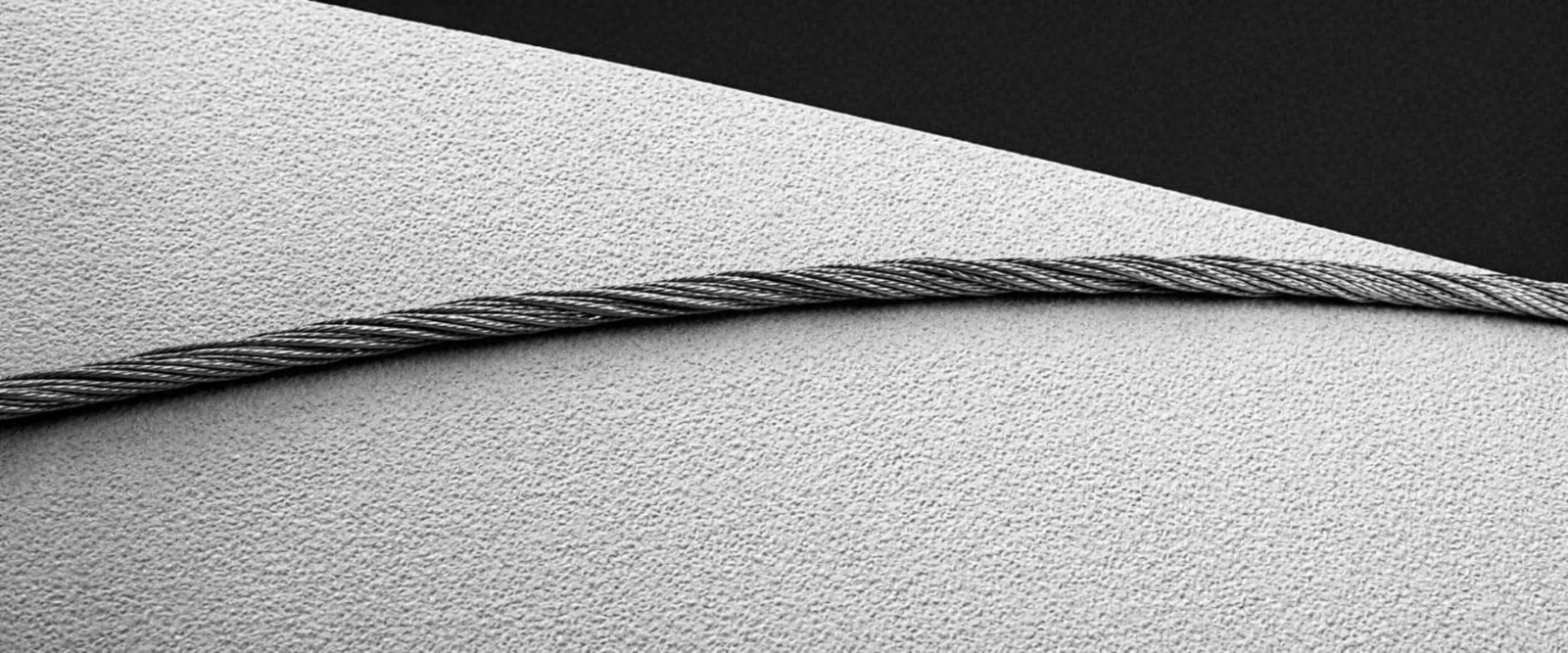
PU Discs Backed by Practical Texturing Expertise
TSP supplies PU Discs with practical application support to match the dimensions, profile and surface specification to your friction unit and yarn. Our support draws on Bipin Chauhan’s texturing experience since 1986, covering disc selection, production trials and process troubleshooting.
Production Speed and Yarn Quality
Polyurethane friction discs combine effective twist transfer with a compliant yarn contact surface. A suitable PU grade can support higher production speeds while reducing filament damage and maintaining yarn quality. Selection should match the yarn, friction unit and operating conditions.
Effective Twist Transfer
Consistent traction helps transmit the torque needed for twist insertion. This can support stable texturing as production speed increases.
Gentle Filament Contact
The compliant PU surface can reduce abrasion and broken filaments, helping retain yarn strength and elongation, particularly with fine filaments.
Consistent Yarn Properties
Stable twist and yarn transport support uniform crimp, bulk and elasticity. Surface condition and disc accuracy contribute to consistency between positions.
Higher First Quality Output
A disc that permits higher speed while controlling breaks and downgraded yarn can improve saleable output. Assess the result in kilograms per position.
Evaluating Production Speed
Increase speed in planned steps while checking tension stability, filament damage and finished yarn properties. The attainable speed also depends on yarn quality, heating and cooling, machine condition and disc configuration. A disc change should be evaluated against a documented production baseline.
PU Discs
Working Disc
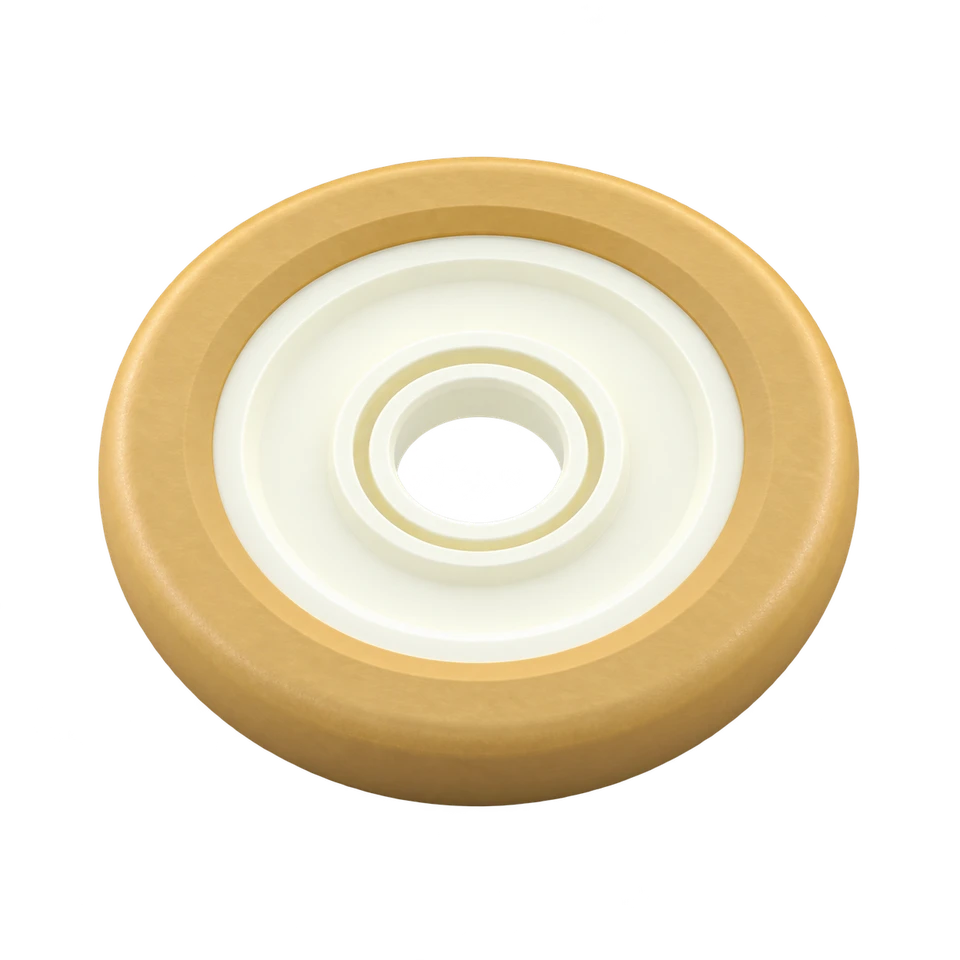
Working Surface for Twist Generation
Guide Disc
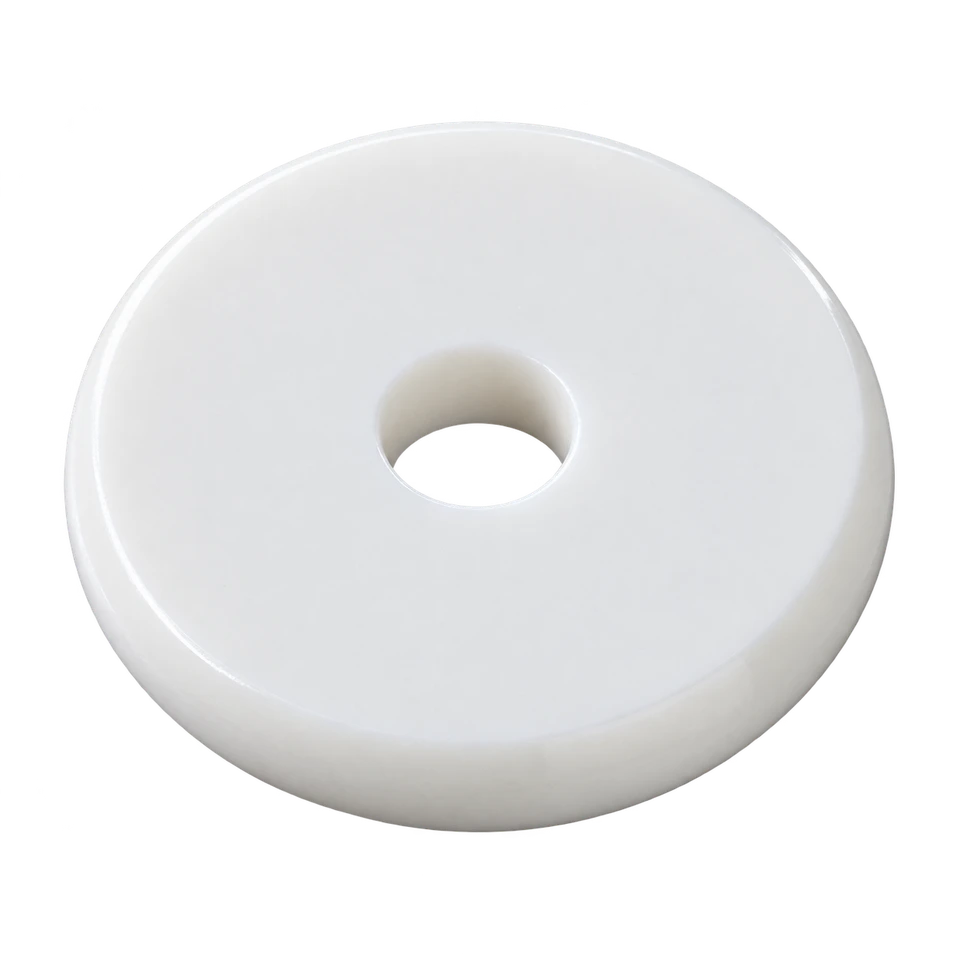
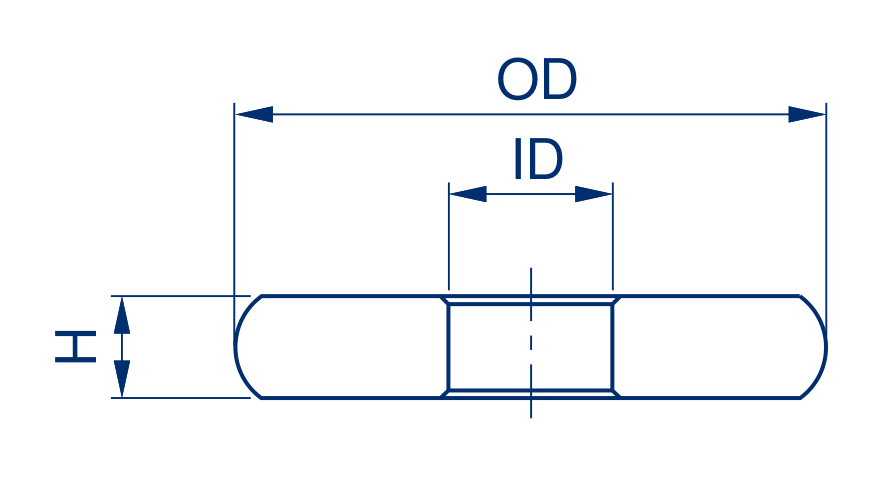
Plain Symmetric Edge Polished Guide Disc
Profiled Guide Disc
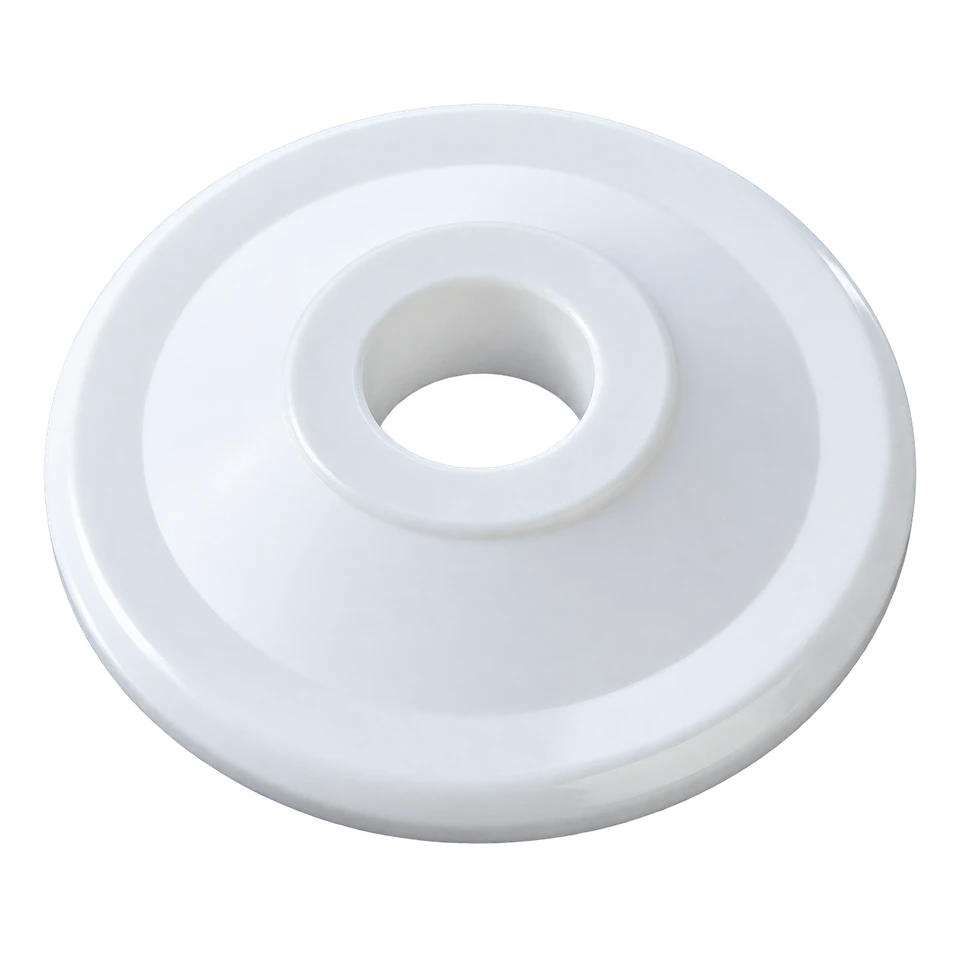
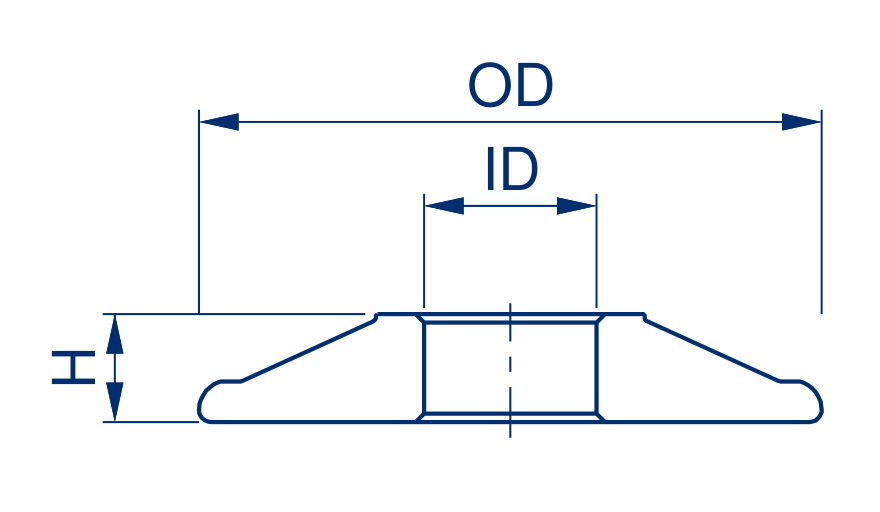
Polished Reduced Edge Profile Exit Disc
Knife Edge Disc
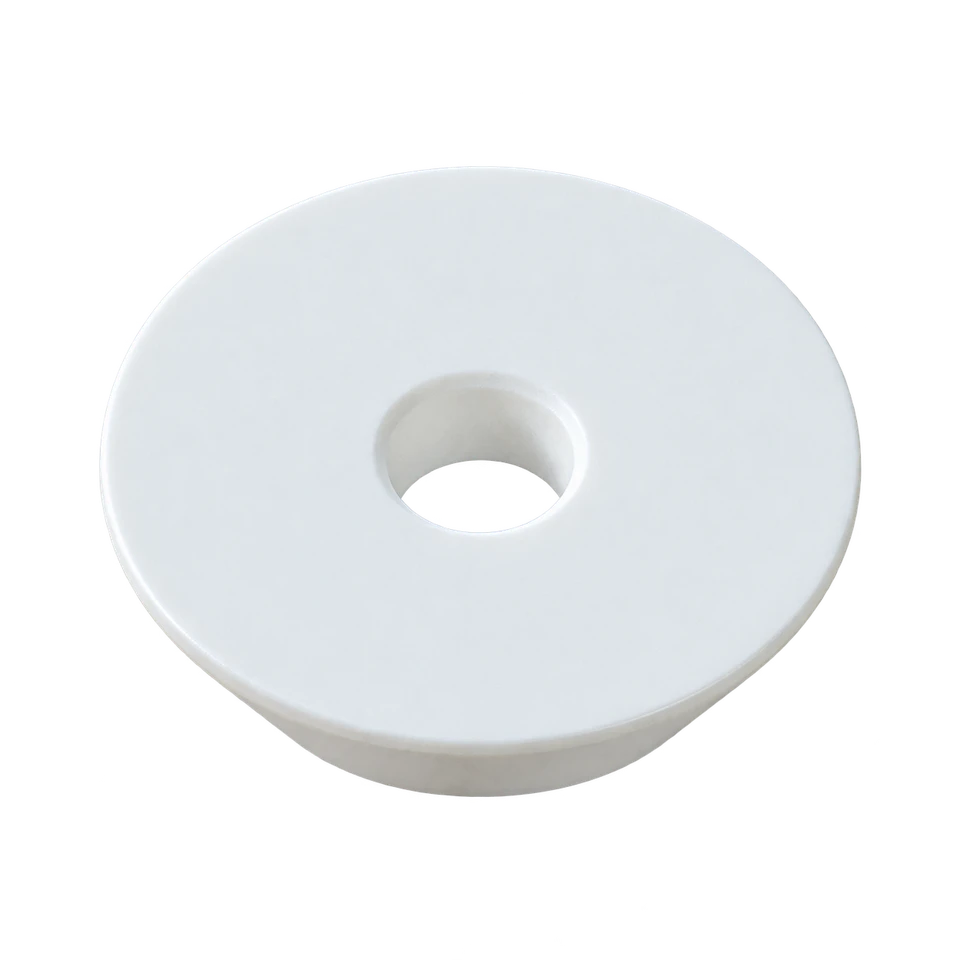
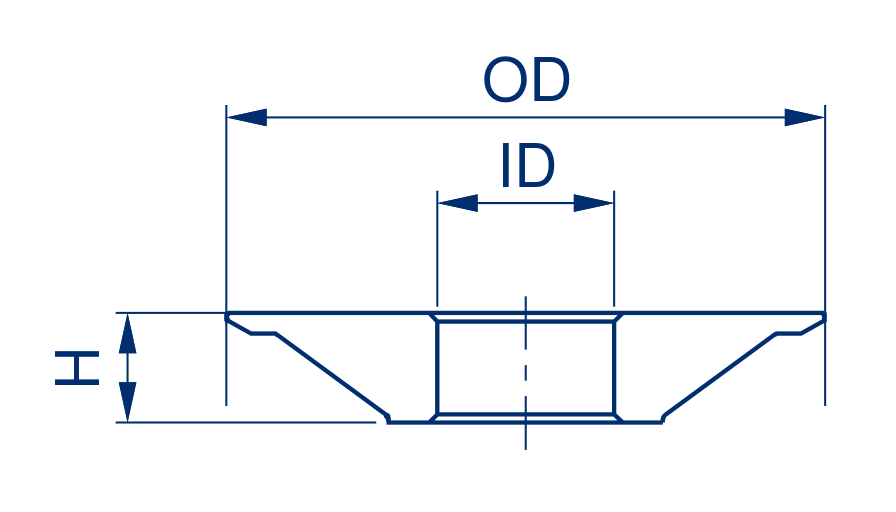
Polished Knife Edge Profile Exit Disc
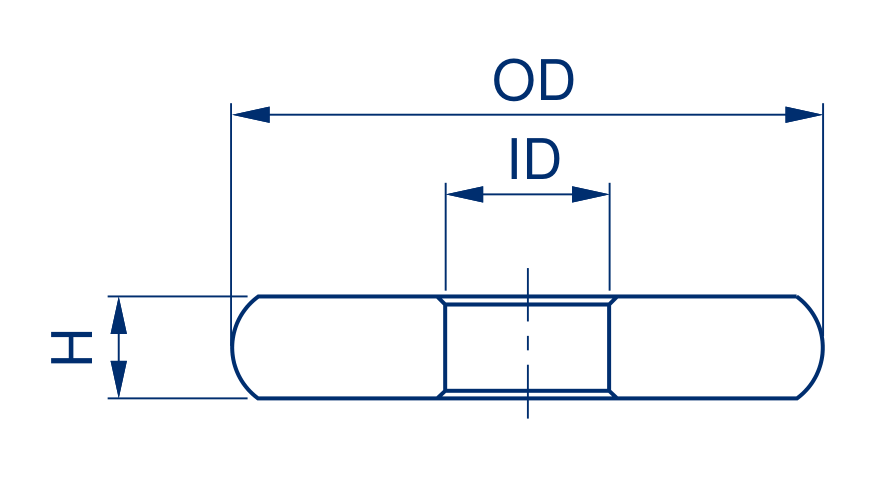
OD = outside diameter | ID = bore diameter | H = thickness. Confirm the complete drawing and working surface grade before ordering.
Disc Sizes and References
All dimensions are in millimetres. Quote the disc family and reference together, along with OD, ID, H and profile. References are local to each table and are not OEM part numbers.
Working Discs
| Reference | OD (mm) | ID (mm) | H (mm) | Photo |
|---|---|---|---|---|
| 1 | 58 | 14.45 | 9 | A |
| 2 | 54.5 | 12 | 9 | A |
| 3 | 52 | 14.45 | 9 | A |
| 4 | 52 | 12 | 9 | A |
| 5 | 49.6 | 12 | 6 | A |
| 6 | 45 | 12 | 6 | A |
Other Sizes are Available
Guide Discs
| Reference | OD (mm) | ID (mm) | H (mm) | Photo |
|---|---|---|---|---|
| 1 | 58 | 14.45 | 9 | B |
| 2 | 52 | 14.45 | 9 | C |
| 3 | 52 | 12 | 6 | B |
| 4 | 47.8 | 12 | 6 | C |
| 5 | 52 | 14.45 | 9 | B |
| 6 | 46 | 14.45 | 9 | C |
| 7 | 52 | 12 | 9 | B |
| 8 | 46 | 12 | 9 | C |
| 9 | 49.6 | 12 | 6 | B |
| 10 | 45 | 12 | 6 | B |
Other Sizes are Available
Knife Edge Discs
| Reference | OD (mm) | ID (mm) | H (mm) | Photo |
|---|---|---|---|---|
| 1 | 54.5 | 14.45 | 9 | D |
| 2 | 49 | 14.45 | 9 | D |
| 3 | 49 | 12 | 9 | D |
| 4 | 48 | 12 | 6 | D |
| 5 | 47.2 | 12 | 6 | D |
| 6 | 43 | 12 | 6 | D |
Other Sizes are Available
Selecting the PU Disc Hardness
Shore A hardness indicates resistance to indentation. It helps describe the contact surface, but it does not define friction, wear resistance or yarn performance by itself. The examples below are starting points for comparison trials.
Softer PU
Example 83 Shore A
A more compliant surface can accommodate the yarn contact and may help protect delicate filaments.
Evaluate for fine filament yarns or where filament damage limits speed or quality. Monitor grip, disc temperature, tension stability and wear.
Firmer PU
Example 90 Shore A
Greater resistance to indentation can help maintain the contact geometry under load.
Evaluate where deformation or contact stability is a concern, including some heavier yarns. Confirm that the selected grade maintains acceptable filament quality.
Why the PU Compound Matters
Two discs with the same Shore A hardness can behave differently. PU formulation, surface finish and disc geometry influence traction and durability. Resistance to polishing, operating heat and spin finish must also suit the application.
Matching the Grade to the Process
Specify the hardness scale and grade, then confirm performance with the intended yarn. Softer grades do not necessarily give more friction, and firmer grades do not necessarily give longer service life. There is no universal hardness allocation based on denier alone.
PU Grade Application Examples
The following examples link particular PU formulations with yarn applications. Use them to shortlist trials; they are not universal hardness rules. Confirm the complete grade, tolerance and availability with TSP.
Very Fine Filaments
82 ± 2 Shore A
Specialised soft formulation, including applications below 0.3 d.p.f.
Fine Denier Yarns
90 ± 2 Shore A
Application example: 75 to 150 denier.
Cotton Like Yarns
92 ± 2 Shore A
Specialised formulation for cotton like yarns and 150 denier.
Heavier Denier Yarns
93 ± 2, 94 ± 2 or 96 ± 2 Shore A
Application example: 200 denier and above.
PA6 Yarns
92 ± 2 Shore A
Dedicated formulation for yarns below 70 denier and compatibility with nylon spin finish.
Specification Checks
Confirm hardness, diameter, bore, thickness, surface roughness and axial and radial runout.
Filament count, yarn polymer and disc formulation remain essential. A fine yarn does not automatically require the softest grade.
PU Disc Selection Tables
Use these recommendations as application references. Confirm the PU grade and friction unit before selecting a disc combination.
Disc Combination by Yarn Linear Density
| Disc Thickness | Disc Combination | Yarn Linear Density (Denier) | |||||||
|---|---|---|---|---|---|---|---|---|---|
| 30 | 40 | 50 | 70 | 100 | 150 | 300 | 450 | ||
| 6mm | 3 / 3 / 1 | ● | ● | ● | ● | Not Indicated | Not Indicated | Not Indicated | Not Indicated |
| 6mm | 3 / 4 / 1 | Not Indicated | Not Indicated | ● | ● | ● | ● | Not Indicated | Not Indicated |
| 6mm | 3 / 5 / 1 | Not Indicated | Not Indicated | ● | ● | ● | ● | ● | Not Indicated |
| 9mm | 1 / 4 / 1 | Not Indicated | ● | ● | ● | ● | ● | Not Indicated | Not Indicated |
| 9mm | 1 / 5 / 1 | Not Indicated | Not Indicated | Not Indicated | ● | ● | ● | ● | Not Indicated |
| 9mm | 1 / 6 / 1 | Not Indicated | Not Indicated | Not Indicated | Not Indicated | Not Indicated | ● | ● | ● |
| 9mm | 1 / 7 / 1 | Not Indicated | Not Indicated | Not Indicated | Not Indicated | Not Indicated | Not Indicated | ● | ● |
A dot marks a selection shown in the table. Confirm the final disc combination for your yarn and friction unit with TSP.
Shore A Hardness and Yarn Application
| Type | Shore Hardness (A) | Application |
|---|---|---|
| Soft Type | 83 | 0.3 to 0.5 d.p.f. |
| 85 | 0.5 to 1 d.p.f. | |
| Standard Type | 88 | 0.5 to 3 d.p.f. |
| 90 | 200 to 300 denier |
Yarn Denier and Filament Fineness
Yarn denier describes the total yarn linear density. Denier per filament, or d.p.f., describes the fineness of each filament. Both are needed when assessing contact behaviour and selecting a disc grade.
d.p.f. = Yarn Denier ÷ Number of Filaments
150 Denier 48 Filaments
3.13 d.p.f.
Relatively coarse individual filaments.
150 Denier 144 Filaments
1.04 d.p.f.
Finer filaments at the same yarn denier.
150 Denier 288 Filaments
0.52 d.p.f.
Fine filaments in a 150 denier bundle.
300 Denier 576 Filaments
0.52 d.p.f.
The same filament fineness in a heavier bundle.
Lower d.p.f. Yarns
Prioritise gentle contact and stable traction. Compare suitable compounds and hardnesses using filament damage and finished yarn properties.
For fine polyamide, assess resistance to surface polishing as well as wear.
Higher Denier Yarns
Assess operating temperature, contact stability and wear under the intended load.
A heavier yarn may still contain fine filaments. Confirm the filament count before choosing a firmer disc.
Process Evaluation and Disc Selection
Compare disc grades on the same yarn and machine configuration. Establish a baseline, optimise the disc to yarn speed ratio for each grade, then assess performance at increasing production speeds.
Production Performance
Record speed, breaks, efficiency and first quality kilograms per position. Include downgraded yarn and stoppages when comparing operating value.
Yarn Quality
Check broken filaments, tenacity, elongation, crimp and dye uniformity. Accept a speed increase only when the required yarn properties are maintained.
Tension Stability
Monitor T1 before the friction unit and T2 after it, including variation and spikes. Evaluate T2 together with yarn properties; the lowest value is not always the best setting.
Disc Service Performance
Inspect disc temperature, deposits, polishing and wear after sustained running. Confirm compatibility with the spin finish and use an approved cleaning procedure.
Ratios and Units
D/Y is the ratio of disc peripheral speed to yarn speed. The tension ratio T2/T1 has no units. Specific yarn tension is expressed in cN/tex and should use a stated yarn linear density basis.
PU and Ceramic Disc Performance Comparisons
Two polyester yarn trials compare polyurethane (PU) and ceramic discs under the conditions shown. These are individual reported examples, not performance guarantees. Tenacity is shown in cN/tex in the confirmed test units.
1 - 5 - 1 Disc Configuration
| Parameter | PU | Ceramic |
|---|---|---|
| Disc Configuration | 1 - 5 - 1 | 1 - 5 - 1 |
| Speed (m/min) | 650 | 700 |
| Tension Ratio | 0.70 | 0.90 |
| Elongation (%) | 20.6 | 20.4 |
| Tenacity (cN/tex) | 4.03 | 4.02 |
| Crimp Contraction (%) | 3.45 | 3.50 |
Higher speed with similar yarn properties.
1 - 6 - 1 Disc Configuration
| Parameter | PU | Ceramic |
|---|---|---|
| Disc Configuration | 1 - 6 - 1 | 1 - 6 - 1 |
| Speed (m/min) | 650 | 650 |
| Tension Ratio | 0.65 | 0.73 |
| Elongation (%) | 15.1 | 15.4 |
| Tenacity (cN/tex) | 3.10 | 3.14 |
| Crimp Contraction (%) | 7.40 | 7.40 |
Similar yarn properties. Longer ceramic service life was reported but not quantified.
Compare yarn properties, tension ratio, disc condition and service life together. Record how the tension ratio is calculated and where tensions are measured so trial results are interpreted consistently.
Evaluate Discs in Your Production
1. Record the Baseline
Record the current disc specification, service history, yarn lot, settings and baseline yarn properties. Agree acceptance limits before wider installation.
2. Compare Candidate Discs
Compare candidate discs on matched positions. Keep settings constant initially and record any later optimisation separately.
3. Measure Yarn Performance
Measure T1 and T2 variation, crimp contraction, tenacity, breaking elongation, broken filaments, deposits and end breaks using consistent sampling and measurement methods.
4. Confirm Consistency
Repeat the comparison over representative production and cleaning cycles. Check that any improvement is sustained across the required yarn properties and operating conditions.
Discuss Your PU Disc Requirements
Contact TSP with the machine and friction unit model, disc dimensions or part number, yarn polymer, denier and filament count. Include the present speed, disc configuration and quality target so that the PU disc options and application requirements can be discussed.
Send the information below so TSP can check suitability and recommend a specification:
Disc Identification
Disc family and catalogue reference, existing part number or drawing, OD, ID, H, edge profile and surface grade if known.
Machine and Friction Unit
Manufacturer, model and disc configuration.
Yarn and Process
Polymer, yarn count, filament count, dope dyed status, processing speed and operating settings.
Production Requirements
Current yarn properties, T1 and T2 measurements, contamination or filament damage, and the result you want to achieve.
Supply Requirements
Quantity and delivery destination.
Disc surface characteristics can be discussed as part of your enquiry. TSP can support specification review, supply and performance evaluation.
Wear Resistance
Disc materials and surfaces selected for the yarn and operating conditions.
Controlled Yarn Path
Disc geometry and configuration support consistent yarn contact and tension.
Material Selection
Choose polyurethane or ceramic discs to suit process and quality requirements.