



High Efficiency Cooling Tracks for Draw Texturing Machines
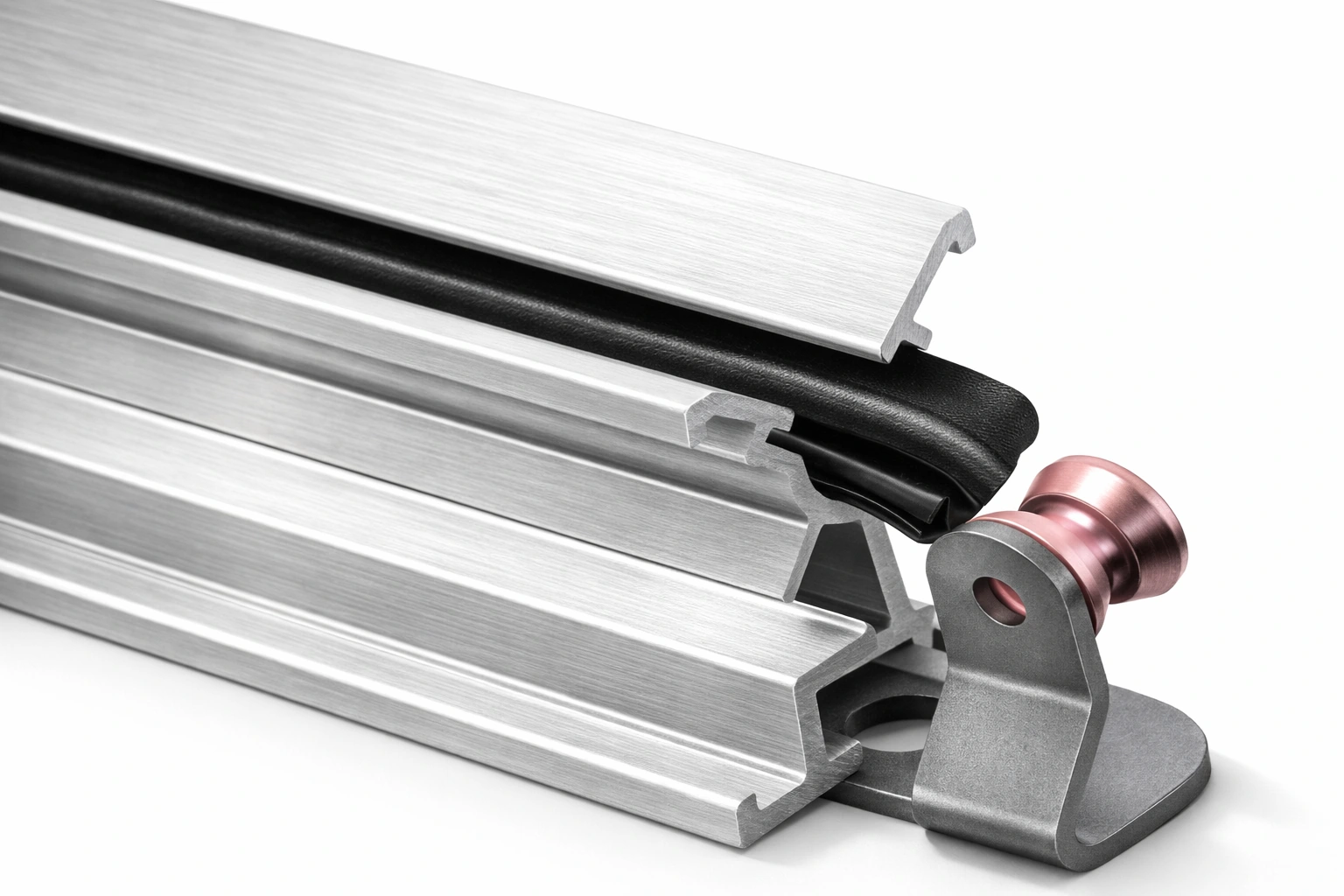
TSP High Efficiency (HE) Cooling Tracks replace worn or damaged OEM tracks on false twist draw texturing machines. The aluminium alloy body, optimised cooling profile and protected yarn contact surfaces are designed to improve heat dissipation, support consistent yarn quality and reduce filament damage.
More effective cooling can also create scope for higher processing speeds or a shorter cooling zone and twisted yarn path, subject to the yarn, machine configuration and operating conditions.
Why Replace Worn Cooling Tracks?
Continuous yarn contact can wear or cut the cooling surface. The rate of wear depends on yarn type and the thread line alignment at the track entry and exit. Damaged tracks can cause inconsistent cooling, filament damage and changes in yarn properties.
Replacing worn tracks restores a smooth cooling path. Correct alignment remains essential for yarn quality and track service life.
Key Benefits
Improved Heat Dissipation
The aluminium alloy body and optimised cross section help transfer heat away from the yarn contact surface.
Consistent Yarn Cooling
More uniform cooling supports position to position consistency, stable crimp characteristics and repeatable yarn properties.
Reduced Filament Damage
Smooth contact surfaces and ceramic guides help protect sensitive filaments through the cooling zone.
Processing Speed
Improved cooling and track curvature offer the potential to increase process speed while maintaining the required yarn quality.
Process Stability
A continuous, controlled yarn path supports stable yarn handling and consistent tensile properties.
Maintenance and Reliability
Replaceable wear inserts and protected entry and exit points support servicing and reduce the need to replace the complete track.
Thermal Conductivity Comparison
Conventional OEM cooling tracks commonly use mild steel or stainless steel. The aluminium alloy used for the HE track body offers substantially higher thermal conductivity than the stainless steel values shown below.
| Surface Temperature | Aluminium Alloy W/(m·K) | Stainless Steel W/(m·K) |
|---|---|---|
| 25°C | 150 - 170 | 16.0 |
| 125°C | 160 - 180 | 17.5 |
| 225°C | 170 - 190 | 19.0 |
The supplied values indicate approximately 9 to 11 times the thermal conductivity of stainless steel across these temperatures. This compares material conductivity; it does not mean the yarn cools 9 to 11 times faster.
Design Features and Specifications
Cooling Track Body
Aluminium alloy construction with an optimised cross section for heat dissipation.
Single Piece Cooling Zone
A continuous cooling surface avoids alignment joints between separate track sections.
Replaceable Inserts
Coated, hardened steel inserts provide the yarn contact surface and can be replaced when worn.
Surface Hardness
Greater than 1000 Vickers.
Yarn Contact Finish
Surface roughness below 0.03 µm Ra to minimise filamentation and yarn damage.
Ceramic Yarn Guides
Guides at the entry and exit protect the areas most exposed to yarn contact and wear.
Track Curvature
Optimised geometry supports a stable yarn path and controlled contact through the cooling zone.
Barmag AFK Cooling Track Conversion
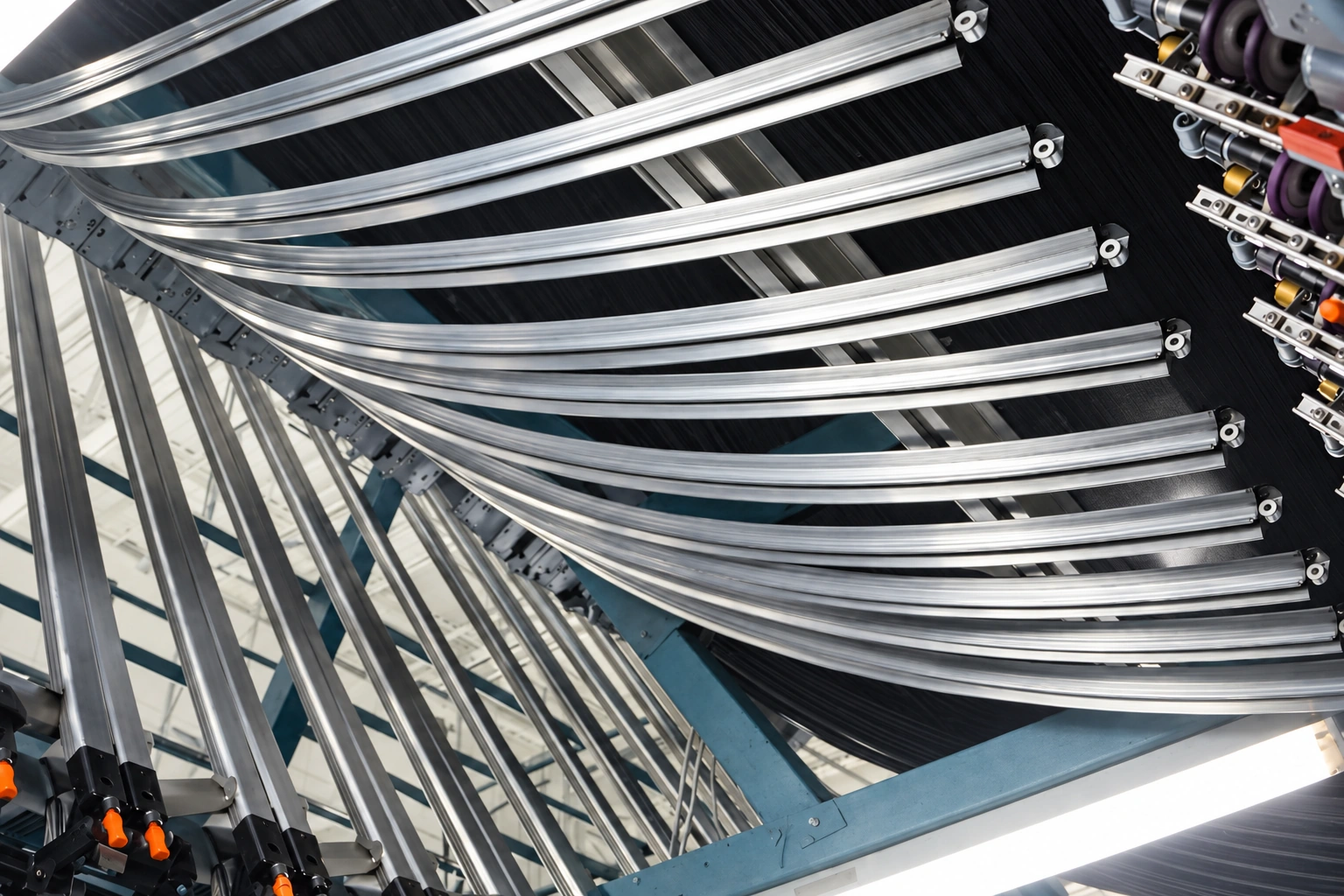
The photographs show an HE cooling track retrofit and the original Barmag AFK cooling track arrangement.
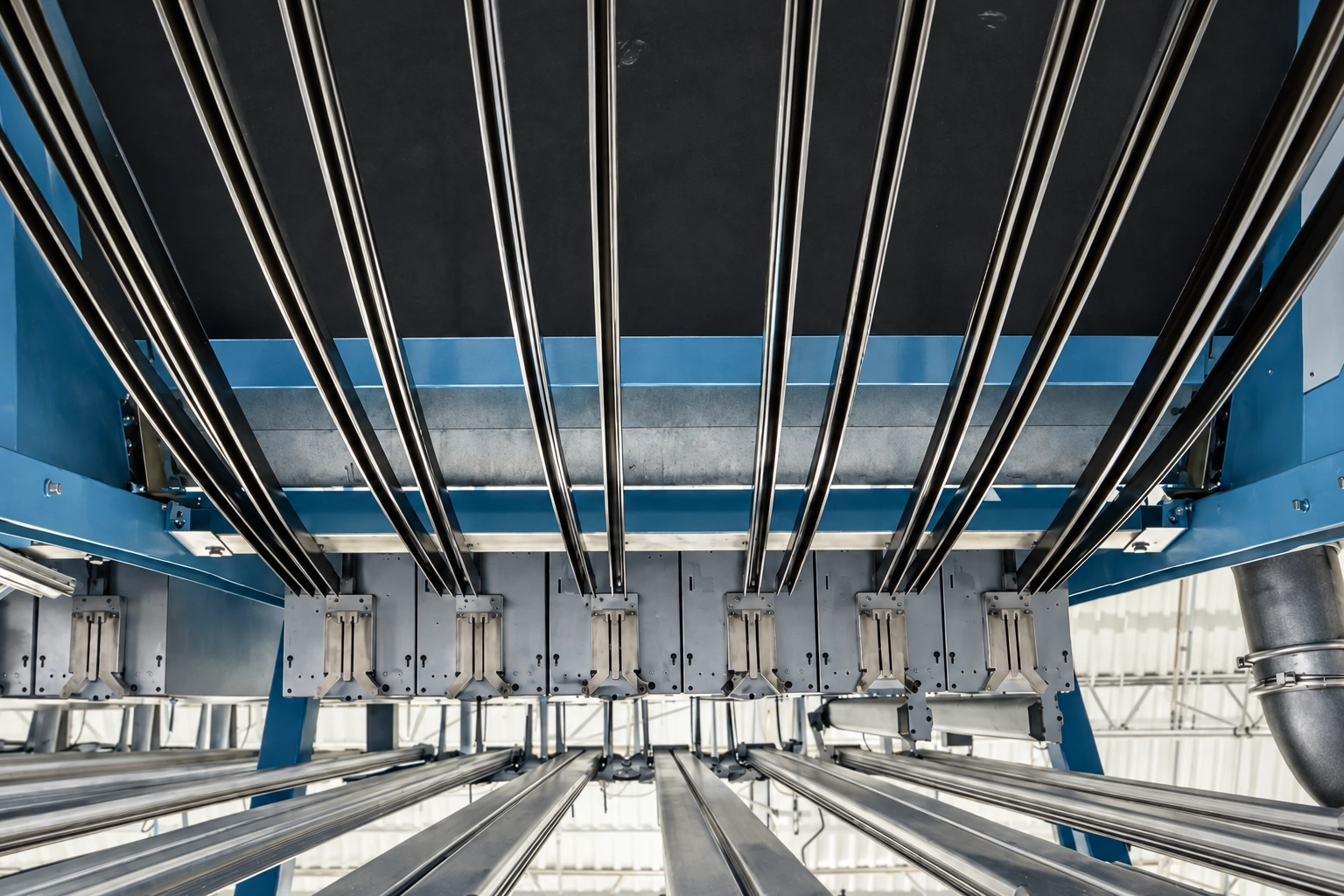
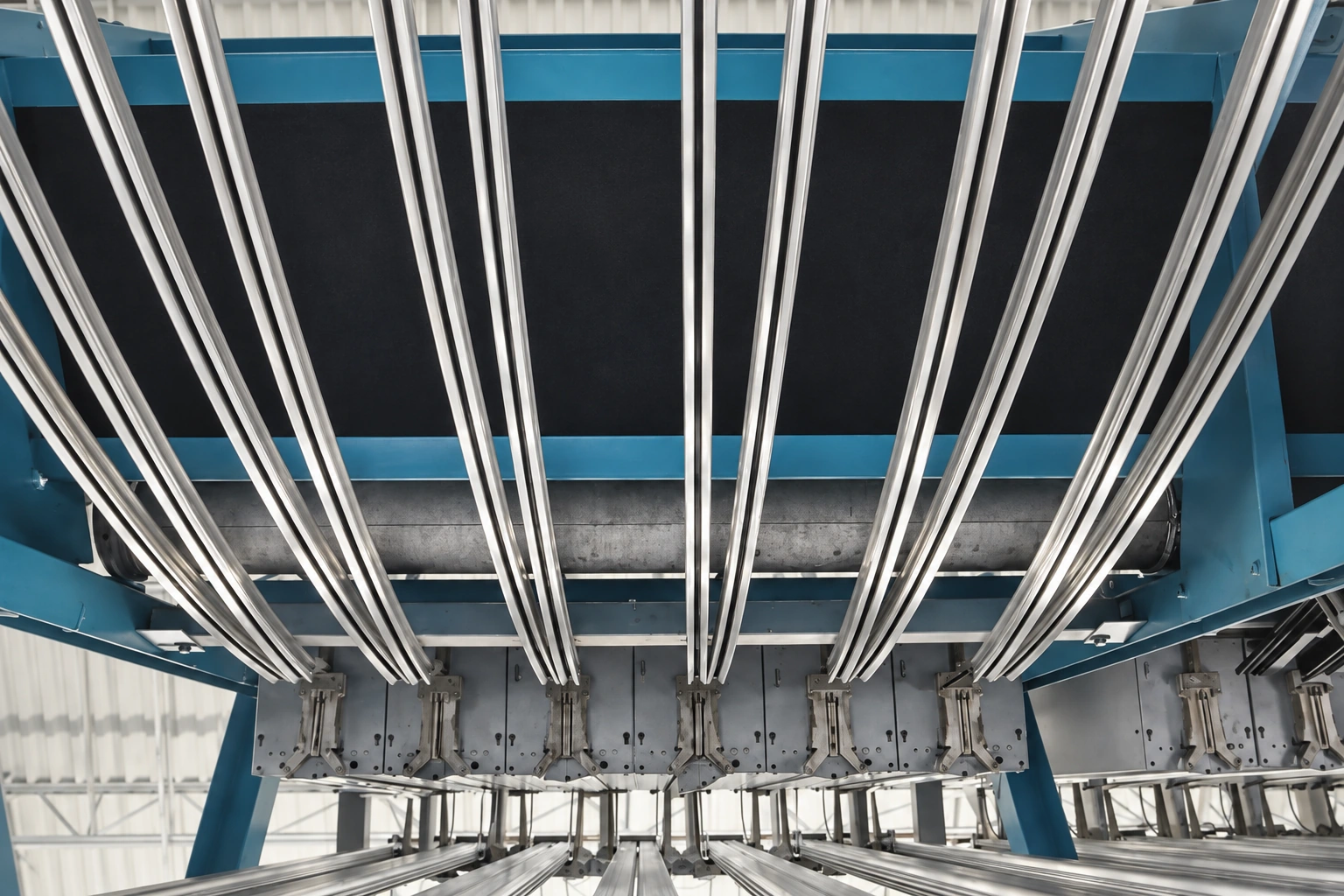
HE Cooling Tracks Installed on Barmag AFK
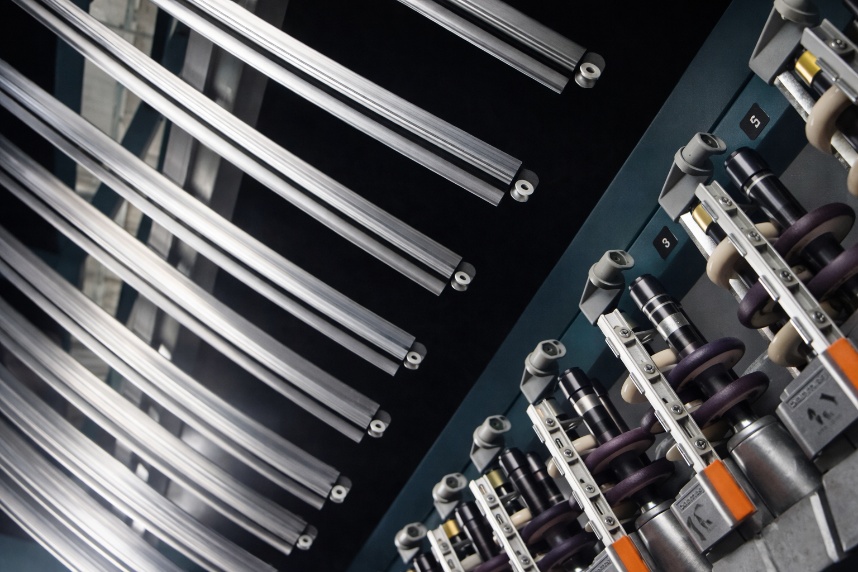
Installation and Machine Compatibility
HE Cooling Tracks are available for Rieter Scragg, Rieter ICBT, Barmag FK6 and Barmag AFK machines, with configurations for other OEM draw texturing machines. Track length, curvature, mounting points and yarn guide positions are matched to the existing machine layout.
The conversion is designed as a direct replacement without major machine modifications. TSP reviews the machine and cooling zone arrangement to confirm suitability and installation requirements.
Typical Applications
Worn Track Replacement
Restore the cooling path where existing tracks are cut, worn or damaged.
Fine Denier and Sensitive Yarns
Improve yarn handling where filament damage or surface contact is a concern.
Higher Speed Production
Review cooling capacity where yarn quality limits the achievable processing speed.
Cooling Consistency
Address variations between machine positions and support more repeatable product quality.
Manufacturing Quality and Process Support
Selected materials, precision manufacturing and quality control support track durability, surface finish and reliable operation. TSP combines these design features with practical false twist process knowledge to help match the conversion to the customer’s yarn and production requirements.
Yarn Cooling
Cooling geometry supports heat removal before the yarn reaches the friction unit.
Controlled Yarn Contact
Contact surfaces and guide positions support a consistent yarn path.
Machine Integration
Check available space, mounting and yarn path alignment before conversion.